Be yourself; Everyone else is already taken.
— Oscar Wilde.
This is the first post on my new blog. I’m just getting this new blog going, so stay tuned for more. Subscribe below to get notified when I post new updates.
Be yourself; Everyone else is already taken.
— Oscar Wilde.
This is the first post on my new blog. I’m just getting this new blog going, so stay tuned for more. Subscribe below to get notified when I post new updates.
Aaaaaaaaaaaaaaaaaaaaand we’re back with another post! Our final one, in fact.
Today, I will be reflecting on user generated content or as I will cut it short, UGC. UGC in it’s very simplest is content created by the public. It can be done by ANYONE, ANYWHERE through any platform. Pretty neat right? Buuuuuut, it has some major downfalls in my opinion.
Last week, my team and I had to create a video and we decided to tackle one of the biggest issues this year, COVID-19. Why I say “one of” you may ask? Because the biggest issue of all is the false news that has attached itself to the COVID-19 pandemic. That’s right. There has been an enormous spike in fake news around the virus and it is only causing more panic for everyone.
There have been reports about Cristiano Ronaldo turning his hotels into hospitals, there have been various ‘cures’ for the diseases as well! With social media being so prominent this year, there has been no stopping the fake news from spreading, just like the disease itself.
Our teammates Nicole and Darren played news presenters and gave the audience some tips on how to cure and prevent the virus according to Facebook and Whatsapp. While doing our research, the amount of things that we had found online was scary. After scrolling for about 15 minutes, I had already found 3 fake articles created by Facebook users.
Fake news is very harmful, especially for the situation we are in. The virus has been portrayed to be so much scarier than it is and has caused panic among our society. With fear and panic, it can cause us to do irrational things. One good example, panic buying. People are rushing to hoard groceries in Singapore and for no good reason. The government has assured us time and time again, there will always be enough supplies so we do not have to hoard. But content created by social media users have just agitated the situation. People are posting videos of the crazy situations and spreading it online leading to other people thinking they should start panicking as well.
This leads me to appreciate our traditional news stations. With all the insane articles and posts people have been passing around, it’s good to watch traditional tv where reporters are purely reporting FACTS. Yes, new media has made it very convenient for us to obtain information. We do live in a fast paced society and we’re always on the go which is why watching the news on television can be quite a task but, atleast we can believe that the information is real. Television news is sorted out and fact checked by professionals and are only presented to you to inform you of the truth.
I’m quite positive that if everyone just stopped to watch the news on television and listen to professionals speak on the situation, there would be much less panic than there is right now. An occasional fake article in other times may cause no harm, but for something so serious, I advise everyone to go back to television news and newspapers and get your facts right!
In last week’s BCM class, we discussed on Feminism and what it meant to each of us individually. So today, I thought I’d share my thoughts with you guys over here!
In our discussion, my group and I had come to a common consensus that we believe feminism is combating the stereotypes forced upon us and standing up against objectification. For many years, women have advertised and put on display to promote products such as chicken, cigarettes and even common soft drinks. Not only that, we have been victims of degrading slurs to make us look like nothing but an inanimate object when we sure as hell are more.
My group looked into one advertisement in particular that was done by a very well-known restaurant around the world, Nandos. Nandos, India, developed a series of ads, yes, A SERIES, not just ONE ad, but a series of ads that objectified women so disgustingly.

Revolting isn’t it?
So, this week, my team and I decided to combat this ad, with an even BETTER ad. We developed an advertisement that showcased that women were more than just ‘hot chicks’. But hey, that’s not denying that we are very hot chicks!

In our ad, we used women like Angelina Jolie, who was a humanitarian and Lady Gaga, who is an extraordinary artist. These women are known to be huge advocates for women empowerment and are big figures in their respective job. We cut out their pictures and we pasted their glorious titles around them and covered them with a pull away picture of a chicken. Why? Like I said, yes, we are hot chicks on the outside, but we’re also strong, independent, caring and extraordinary women.


In the previous week, we also talked about public spheres in Singapore and is there even one? Well first off, to simply put, a public sphere is an area where people can come together to speak about societal problems and hopefully influence a change.
One very popular controversial advertisement that had the whole world talking was Dove’s campaign back in 2017. The advertisement showed a black woman changing into a white woman and caused a widespread of anger among people of color. Since the advertisement was released, it brought up the issue about racism in America.

This issue was discussed everywhere especially online and was even talked about by people with a following. One example, was makeup artist, Naomi Blake who tweeted, “the tone deafness in these companies makes no sense”.
Keith Boykin also tweeted, “Okay, Dove…
One racist ad makes you suspect.
Two racist ads makes you kinda guilty.”
Due to this, the issue on racism in America was more agitated than ever. News outlets from all over the world picked up on the story and reported it. Even our locals news, Straits Times picked up the story and published it.
People were angry not only because this was Dove’s second racist ad, but also because it was already in 2017 and they should have known better than to be so careless. It was brought about in multiple public spheres and people were demanding to be heard.
Now, does Singapore have a public sphere? I don’t think so to be exact. Not one as well done as the ones in countries like Australia that’s for sure. However, I do feel like because we’re lacking our very own public sphere, we seek to use different platforms to help us like Facebook. With that being said, I believe that we should start opening up and allowing Singaporeans to speak their minds publicly.

For the past few weeks I have been talking A LOT about technical media theories and so on but today, we have finally come to talk about everyone’s favourite topic…It’s the age old debate that EVERYONE has an opinion on…
*drumroll please*
The battle between a private-owned media world vs a government-owned media world..
So, who do I think should win?!
Singapore’s media is currently known to be highly controlled by the government through the Ministry of Communications and Information. They regulate the content that is produced in Singapore and are the ones we should be afraid of. Not only do they control what we see from within our country but also what other countries can show us.
Sooooo..for example, a program shown on Netflix to other countries may not be available for Singaporeans to watch because it violates our regulatory rules. Just recently, Singapore ordered to ban ‘weed shows’ that were on Netflix so our poor Singaporeans will not be able to enjoy some trippy content.
I think it’s great!
I personally, for my 22 years alive, have not been gravely affected by the rules that has been imposed for our media. I think it keeps us safe as Singaporeans, to be frank. However, that’s because I’m not someone who likes to think out loud. If I was Amos Yee, then clearly I would have a problem with the media being constantly regulated by the government.
I enjoy the idea that our media is safe for everyone to experience and it cultivates young Singaporeans to grow up in a safe space as well. It’s not like we are completely restricted from anything cool going on on the outside. We are still allowed freedom to have personal social media accounts and we are allowed to express ourselves that’s for sure, and that’s important. Without government control on the media, imagine what chaos would be created?
There are many things to risk if we were not somewhat held on a leash, in my opinion. I revert back to my first case; Singapore vs Weed.
Singapore has always held a strong opinion against weed although it has been proven to help aid some physical and mental disabilities. Even when Thailand legalised medical marijuana, Singapore did not move an inch. Not only that, in the last 2 years, including 2020, Netflix has removed 3 tv shows about weed at the demand of the IMDA (Infocomm Media Development Authority). For me, I stand with legalising marijuana but however, I understand the need to remove such shows for our Singaporean audiences. Being caught with drugs in Singapore is very dangerous and has resulted in many executions. A Netflix account can be created by anyone of any age and if it happens to fall into the wrong hands and could influence a single person, it could cost a life and that is something we should never risk.
In conclusion, I happily support the idea of a government-owned media world. Some people have to face the facts that not everyone is mature enough to handle information responsibly and if we have the opportunity to keep others safe, we should take it!
We’re halfway through!
In today’s blog I will be talk about the second tradition of media studies. Last week I wrote on the ‘media effects’ model and how it is seen that we as audiences have no control over our thoughts and actions when exposed to media. Today, we’ll be talking about how we are DO have control and the choices we make.
The uses and gratifications model refers to why audiences choose to consume certain forms of media and how it benefits them. The model can be broken down into 4 basic needs:

This refers to the need of escaping everyday problems. It could be media that provides a sense of relaxation from their everyday lives or something that overall elevates their emotions and makes them feel better.
I commonly use Facebook to find memes because they make me laugh a little after it’s been a really long and hard day.
2. PERSONAL RELATIONSHIPS
More often than not, people tend to crave interaction and relationships and sometimes people aren’t always able to find it. The media can be used to form these relationships easily with just a few steps. One very good example would be Discord, a chat app that allows you to talk to people from all around the world that share some of your common interests.
Pretty sweet right?
Check out this article about it! Why Discord is my new online home.
3. PERSONAL IDENTIFICATION
Personal identification is wanting to be able to define who you are and to feel represented. Some people even absorb personalities from characters that they see in the media to better understand themselves.
Sort of like identifying yourself with a confident superhero on television and absorbing his confidence into your everyday lives. We all need a little boost sometimes!
4. SURVEILLANCE
Audiences use the media to make sure they are up to date with what’s going on in the world and to gain information about it. We all know an aunt or uncle who loves to share news articles on Whatsapp to their family members!
Currently, everyone is on the media to be constantly updated on the latest news about the Coronavirus and whether or not we need to panic-buy groceries.
It could stand to look for the reason behind the increase in media usage and how what the society is gaining from it. Some people may use it for one need while others may use it for even more than I have mentioned. The possibilities are endless. There are multitudes of reasons as to why audiences consume the media that they do.
Bayer AG is one of the world’s largest pharmaceutical companies. Founded in 1898, one of Bayer’s biggest drug sellers is Aspirin. The drug is used to reduce pain, inflammation and fever. It is commonly used for headaches as well.
In 2016, Bayer released an advertisement that received many different responses. It received awards at the Cannes Lions Festival and also received hate from millions worldwide.

On a denotative level: This is a picture of a quote said by someone.
On a connotative level: This quote can be seen as the conversation between a sexual predator and their victim.
On a mythical level: Bayer is promoting their drug to sexual abusers who enjoy filming their victims and reduces headaches for difficult victims.
Despite being part of a bigger campaign, many went on to argue that this advertisement was sexist and specifically targeted at making things easier for men. At the awards, the recipients were also ALL men which added fuel to the fire.
Bayer has spent a whopping $13 million on lobbying in 2018.
It was a lengthy post today but hopefully a beneficial one for you! Cheers!
Welcome back!
Today I wanted to discuss some of the downfalls I feel are present with the ‘media effects’ model.
The model looks at how the media influences the attitudes of it’s audiences and changes their perceptions on things on a usually negative scale. In my recent lecture for my BCM 110 module, we were given some examples of when the model created anxiety for others. It dates back to the 19th century when books such as ‘penny dreadfuls’ came around and people were afraid that these books might inspire others to commit the same violent acts. The models sees it’s audiences as helpless against messages sent through the media and we are basically forcefully fed ‘bad’ media.
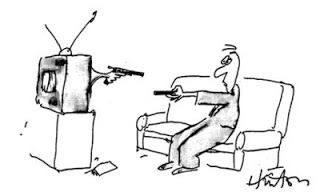
The ‘media effects’ model picks and choose what is wrong. A lot of the time when media is to be blamed for a certain incident that has occurred, the blame tends to fall on something that is fictional. This refers to pushing the blame onto things like books or television shows. This is highly unreasonable and bias as there are more forms of negative behaviour shown on the media outside of these fictional products. The most common is the ‘copycat’ crimes that are not a result of shows or books but instead is a result of what they see on the news. I feel that people use the model as an easy way out just to push the blame on something.
The effects model fails to see the real problem with our society. By using this model to explain all the crime in the world, it looks over what is truly wrong with our society. With this, we are never able to move forward because we always put the blame elsewhere. In my lecture recently, we were given a few crimes to research on to find out if the media had any effect on it. My group researched the mass shooting by Martin Bryant in 1996. What was reported in the media was that Martin was influenced by ‘violent shows’ and ‘bestial porn’ and that led him to commit this heinous crime. After conducting our own research on him, we found out that it had NOTHING to do with the media he consumed. In fact, he grew up in an area that was not even exposed to much media! There was so much more to his story that involved bullying, mental health issues and parental problems such as his dad committing suicide. With all this overlooked, we are hardly able to correct our actions because we never really saw the problem! The problem was that we are not doing enough for kids who are being bullied and we are not doing enough to get help for our mental health and we are simply not doing enough!
It seems like all we are trying to do with the ‘media effects’ model is find something to put the blame on. As we grow and progress every year as a society, we are more than able to think for ourselves without the influence of the media.
With this I would like to ask, is the media REALLY at fault, or is it our society? Should we be revising our views on the model as we progress into a more outspoken society?
References:
https://onlinelibrary.wiley.com/doi/abs/10.1002/9781118541555.wbiepc156
Gauntlett, David (1997), Video Critical: Children, the Environment and Media Power, John Libbey Media, Luton.
Oh no! Another blog?
I know, I know. There are so many blogs out there, it’s so hard to love just one. I grew up following blogs and have always been inspired to make one, so… here I am!
My name is Chelsea (like it wasn’t the biggest text on my front page) and this, is my blog! In this humble page I’d like to post about all the things I love, for you! My interests include anime, astronomy, photography and even astronomy photography. Hah!
Not to forget the biggest part of my life, my pets.

The list could go on, but these are the things that excite me the most.
I have so many ideas for this blog and I can’t wait to post it up so that you guys can learn more about me and get to know me beyond a simple computer screen. Nonetheless, I will be speaking more on my progress in my BCM 110 module in university and updating more posts as I go along. This module will definitely help me gain more knowledge on the part media plays in these times and how it affects the people around it. Going down the psychology path, it is important to learn about all factors present in this society and how it comes into play with mental well being.
For now, we could start on some basic information to get the ball rolling! I am 22 years old this year and I was born on the 7th of July. My horoscope sign is a cancer and my Chinese zodiac animal is a Tiger! I’m currently in university taking my degree in Psychological Sciences. It was a major switch from my Polytechnic diploma in Mass Communications specializing in Journalism.
In polytechnic was where I discovered my love for photography. I enjoyed every project that had me running around with a DSLR in my hand trying to get the best shot. At the same time, I also indulged in my love for astronomy by joining the Astronomy Club! One day, I decided to capture the beauty within a telescope and that was where I found, astronomy photography.

Now I get to study my true passion and I am so excited to have started this blog at the beginning of my journey through university. There are so many new things I have yet to experience and new friends I can’t wait to get to know.
I’d love to share all my skills and knowledge that I have gotten over the years with you guys and I hope that you would love to share your knowledge with me too! The world is a vast space and I’d love to hear what you have to say!
I will leave off with my favourite quote,
“ A candle loses nothing by lighting another candle” – Father James Keller.

Have a WordPress.com account? Log in now.

