Welcome back!
Today I wanted to discuss some of the downfalls I feel are present with the ‘media effects’ model.
The ‘Media Effect’s Model
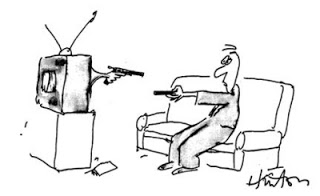
The model looks at how the media influences the attitudes of it’s audiences and changes their perceptions on things on a usually negative scale. In my recent lecture for my BCM 110 module, we were given some examples of when the model created anxiety for others. It dates back to the 19th century when books such as ‘penny dreadfuls’ came around and people were afraid that these books might inspire others to commit the same violent acts. The models sees it’s audiences as helpless against messages sent through the media and we are basically forcefully fed ‘bad’ media.
It’s Downfall
The ‘media effects’ model picks and choose what is wrong. A lot of the time when media is to be blamed for a certain incident that has occurred, the blame tends to fall on something that is fictional. This refers to pushing the blame onto things like books or television shows. This is highly unreasonable and bias as there are more forms of negative behaviour shown on the media outside of these fictional products. The most common is the ‘copycat’ crimes that are not a result of shows or books but instead is a result of what they see on the news. I feel that people use the model as an easy way out just to push the blame on something.
The effects model fails to see the real problem with our society. By using this model to explain all the crime in the world, it looks over what is truly wrong with our society. With this, we are never able to move forward because we always put the blame elsewhere. In my lecture recently, we were given a few crimes to research on to find out if the media had any effect on it. My group researched the mass shooting by Martin Bryant in 1996. What was reported in the media was that Martin was influenced by ‘violent shows’ and ‘bestial porn’ and that led him to commit this heinous crime. After conducting our own research on him, we found out that it had NOTHING to do with the media he consumed. In fact, he grew up in an area that was not even exposed to much media! There was so much more to his story that involved bullying, mental health issues and parental problems such as his dad committing suicide. With all this overlooked, we are hardly able to correct our actions because we never really saw the problem! The problem was that we are not doing enough for kids who are being bullied and we are not doing enough to get help for our mental health and we are simply not doing enough!
What can we do?
It seems like all we are trying to do with the ‘media effects’ model is find something to put the blame on. As we grow and progress every year as a society, we are more than able to think for ourselves without the influence of the media.
With this I would like to ask, is the media REALLY at fault, or is it our society? Should we be revising our views on the model as we progress into a more outspoken society?
References:
https://onlinelibrary.wiley.com/doi/abs/10.1002/9781118541555.wbiepc156
Gauntlett, David (1997), Video Critical: Children, the Environment and Media Power, John Libbey Media, Luton.
 chelsea evangeline smith
Whatsup sisthur!
Short & sweet post that summarised the limitations of the ‘effects model’ based on your opinion and you definitely raised an interesting question. I hope we can discuss that in class because I look forward to the different opinions that our peers have on this.
The point you raised regarding Martin Bryant being raised in a community not exposed to media, yet he still commits a heinous crime. So, can we really blame it on the media for this act of violence? Not likely in the case of Martin Bryant. In his case, it may be social factors that trigger him to commit mass shootings like you said. It’s as though the ‘effects model’ seems to be pointing finger to the most convenient factor to blame for the negative outcome our society produces.
Cheers.
LikeLike